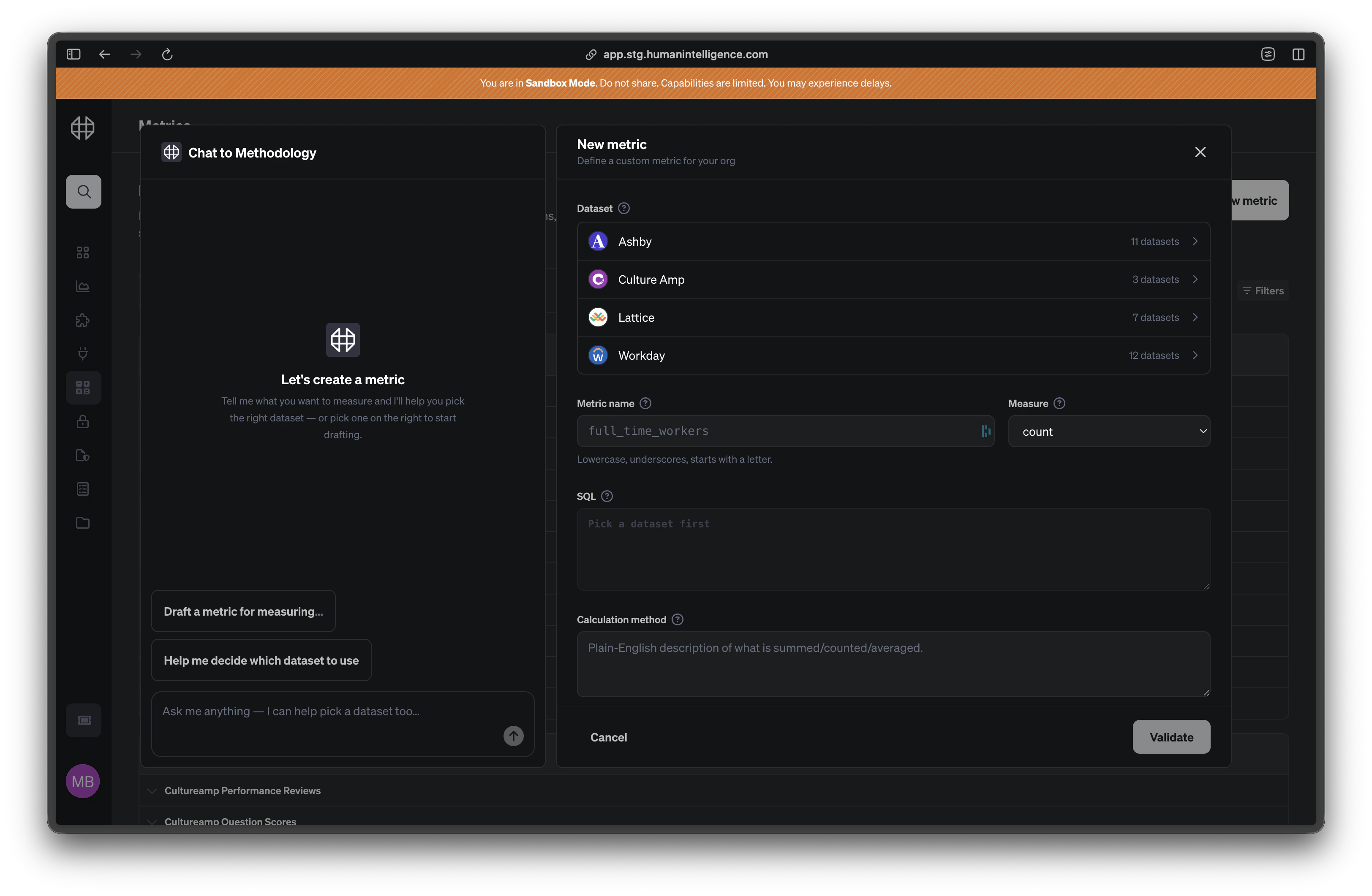
Get AI help understanding and refining your metrics.
The Methodology Copilot is an AI assistant built into Human Intelligence that helps you work with governed definitions — without bypassing the review controls that keep those definitions trustworthy.
The copilot can draft and explain, but it can’t publish changes on its own. Every suggestion still goes through the standard validate, preview, and save lifecycle — the same process as any manual edit.
This means your team gets the speed of AI assistance without giving up the governance controls that make your definitions trustworthy. Every change is validated, previewed for impact, and captured in the audit log.
Sometimes you’ll spot something that needs fixing but you don’t have permission to publish the change yourself. In that case, the copilot can help you create a change request.A change request captures what you want to change and why, then routes it to someone with the right permissions to review and publish. It’s a lightweight way to contribute to your organization’s methodology without needing full edit access.
Not sure if a metric is defined the way you expect? Ask the copilot to explain it first. You might find the current definition already covers your use case.